Delhi braces for heavy security ahead of banned protest
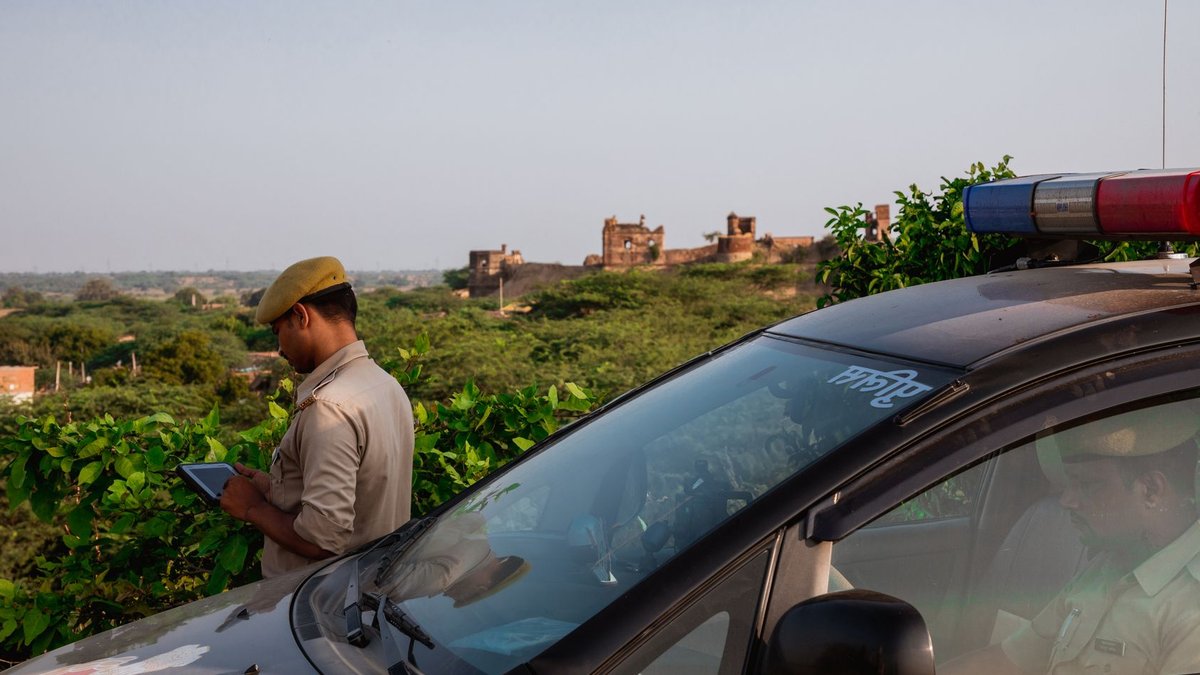
23,000 police, strict prohibitory orders, and extensive security measures are in place ahead of the Cockroach Janata Party (CJP) protest at Delhi’s Jantar Mantar on October 10, as authorities brace for a large turnout demanding the resignation of Chief Election Commissioner Gyanesh Kumar. The protest, which has drawn support from opposition parties and student groups, has been denied permission under Section 163 of the Bharatiya Nagarik Suraksha Sanhita (BNSS), citing potential disruptions.
Massive security deployment for October 10
The Ministry of Home Affairs (MHA) has deployed 221 companies of Central Armed Police Forces (CAPFs), totaling around 23,000 personnel, to assist Delhi Police until October 12. This includes 70 CRPF companies (7,000 personnel) currently stationed in West Bengal and Chhattisgarh, who have been redirected to Delhi. The scale of deployment mirrors the 2020 Northeast Delhi riots, marking one of the largest protest-related security operations in recent years.
Delhi Police intelligence estimates 50,000 protesters could converge in the capital, including participants from neighboring states. Security measures include multi-layered barricades on key routes to Jantar Mantar and Parliament, CCTV surveillance, and Facial Recognition System (FRS)-enabled cameras to monitor movement. Prohibitory orders have also been imposed at Rajghat, with access to metro stations and markets potentially restricted depending on conditions.
Read Also: First-time investors urged to align funds with goals
Liquor shops across Delhi will remain closed on October 9 and 10 as a preventive measure, following a directive from the Excise Department. The order, issued on October 8, states: “In view of the prevailing situation and inputs received from Delhi Police, as a preventive measure aimed at maintaining public order, it is hereby ordered that all retail liquor vends with licences in Form L6, L6& L6FG, L8, L10 and L8 & L14 operating in Delhi will be completely closed on October 9 and October 10.”
Protest denied; CJP accuses selective enforcement
The CJP, led by founder Abhijeet Dipke, has accused authorities of enforcing restrictions selectively. Dipke pointed to recent protests in Mumbai and Bengaluru with the same demand—resignation over the Special Intensive Revision (SIR) of electoral rolls—which were allowed to proceed without major disruptions.
“Jantar Mantar belongs to people of India, it does not belong to Union Home Minister Amit Shah,” Dipke told reporters. “If Mumbai and Bengaluru can have peaceful protests, why is Amit Shah not allowing it in Delhi?” The CJP has called for a nationwide mobilization against the SIR exercise, framing the October 10 gathering as a final push for Kumar’s resignation.
Read Also: Hurricane Threatens US Gulf Coast with Heavy Rain, High Winds
Delhi Police have rejected the protest application, citing the prohibitory orders. Authorities are monitoring social media for calls to action, with intelligence units tracking potential flashpoints. Strict vigil will be maintained at railway stations, bus terminals, and Delhi’s borders to prevent unauthorized entry, including by individuals posing as protesters.
Coordination and contingency planning
Security agencies are maintaining close coordination ahead of the protest, with officials emphasizing a zero-tolerance approach to disruptions. The deployment of 15,000 Delhi Police personnel in the New Delhi district, up from the current 5,000, reflects the anticipated scale of the gathering.


