Target CFO Jim Lee oversees finance strategy
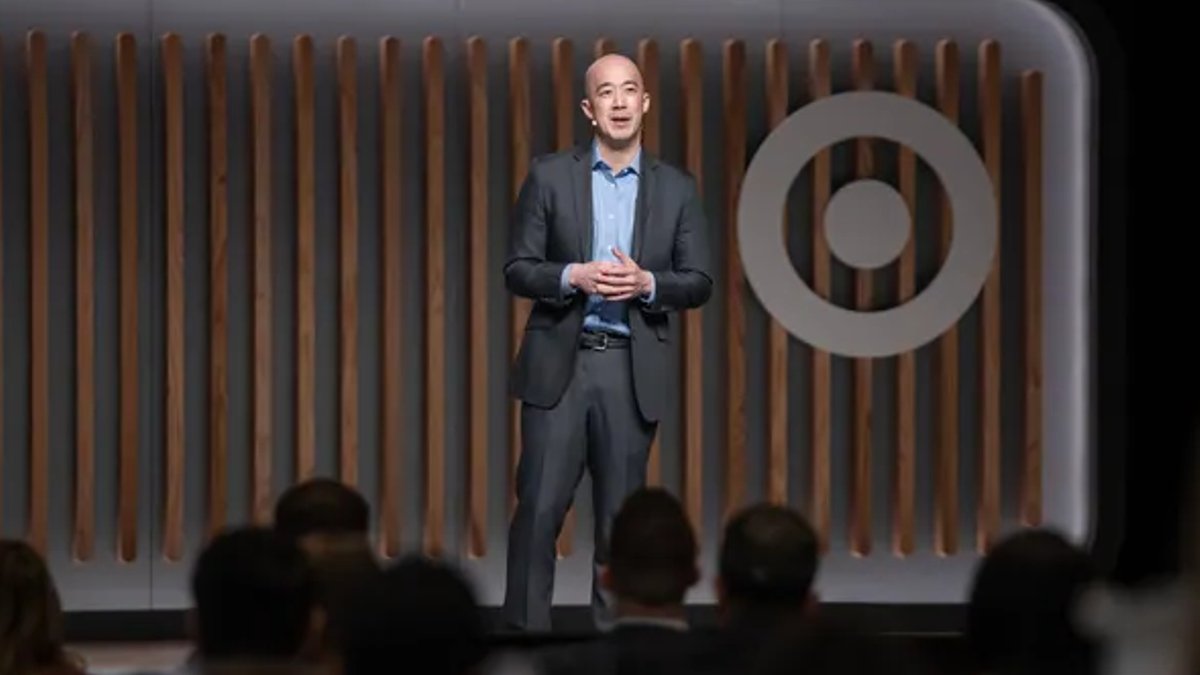
Target’s new CFO, Jim Lee, frequently grabs a Diet Pepsi or Celsius while checking out—a ritual carried over from his 26-year tenure at PepsiCo. Though he enters stores with a specific purpose, like most customers, he often leaves with unexpected items. As he told CFO Dive, “That’s the unique factor of [Target].”
Lee said that the unique factor of Target is its ability to display things in a way that makes them more easy to discover and gives customers destinations.
Lee stepped into Target’s top finance seat in September 2024. He also oversees enterprise strategy at the retailer, which he believes is a strong competitive advantage.
With this combination, Lee can help drive and dictate where the company places its bets in service of its enterprise strategy. He determines where Target is advantaged and where the investments and focus of the organization should be.
Early Career and Education
Lee has always had an affinity for math and solving problems. He studied engineering with a concentration in operational research at Princeton University, graduating in 1996 with a bachelor’s degree in engineering.
After working as a strategic consultant for a few years, Lee joined PepsiCo in 1998 as a director of strategy and finance. His experience at PepsiCo included positions such as deputy CFO, SVP of corporate finance, and chief strategy and information officer.
Lee’s time at PepsiCo also included stints heading up finance for various international divisions, including serving as CFO for Australia and New Zealand and SVP and CFO for PepsiCo Russia, Ukraine, and CIS.
For three years, Lee was based in Moscow as PepsiCo Russia‘s CFO. During that time, the valuation of the Russian ruble plummeted due to drops in crude oil prices and international sanctions.
Joining Target
Lee’s move to Target represented a bit of a sea change for him, as he had spent the bulk of his career in the consumer products space. However, he was excited about what Target represented as a company.
Since joining Target, Lee has stayed focused on hitting the company’s next chapter of growth, which means driving sustained growth quarter over quarter.
Target has moved to adjust after a period of lukewarm performance, with slumping sales impacted by a pullback in discretionary spending and consumer boycotts related to DEI and social issues.
The company has funneled billions to refresh key areas of its stores, reporting capital expenditures of $1.4 billion in its second quarter primarily driven by remodels and new locations.
One example of this effort is the launch of Target Beauty Studio, a beauty-focused area rolled out to 600 stores and on Target.com.
During its most recent quarter ended August 1, Target reported net sales of $26.5 billion, a 5.3% jump from the prior year period.
Lee believes that as long as the company keeps on its current trajectory, it has a strong likelihood to drive sustained growth. His role as CFO is ensuring that Target is constantly focused on prioritization of where it will put its resources.
Lee noted that understanding the place where Target is differentiated and has the right to win is really critical in the retail industry, which is very complex and competitive.
For Lee, the task ahead is simple: stick with the plan, and Target will be able to drive sustained growth and achieve its goals.
In the upcoming holiday season, Target will face an important test of whether its merchandising overhaul is translating into broader, more durable demand, according to Brett Husslein, an equity analyst for Morningstar.
Another example is Target’s “Fun 101 Hardlines” initiative, which focuses on pop culture, toys, and related merchandise.
Driving Sustained Growth
Lee’s focus as CFO is on ensuring Target is putting its money and bets behind the areas where it is truly curating and having a differentiated point of view. The company has lowered the price of more than 10,000 items and continued to invest in redesigns.
Target has moved to expand its footprint, targeting the opening of more than 30 new stores by the end of this year as part of a $5 billion capital investment plan.


