Gen Z protests oust India’s education minister
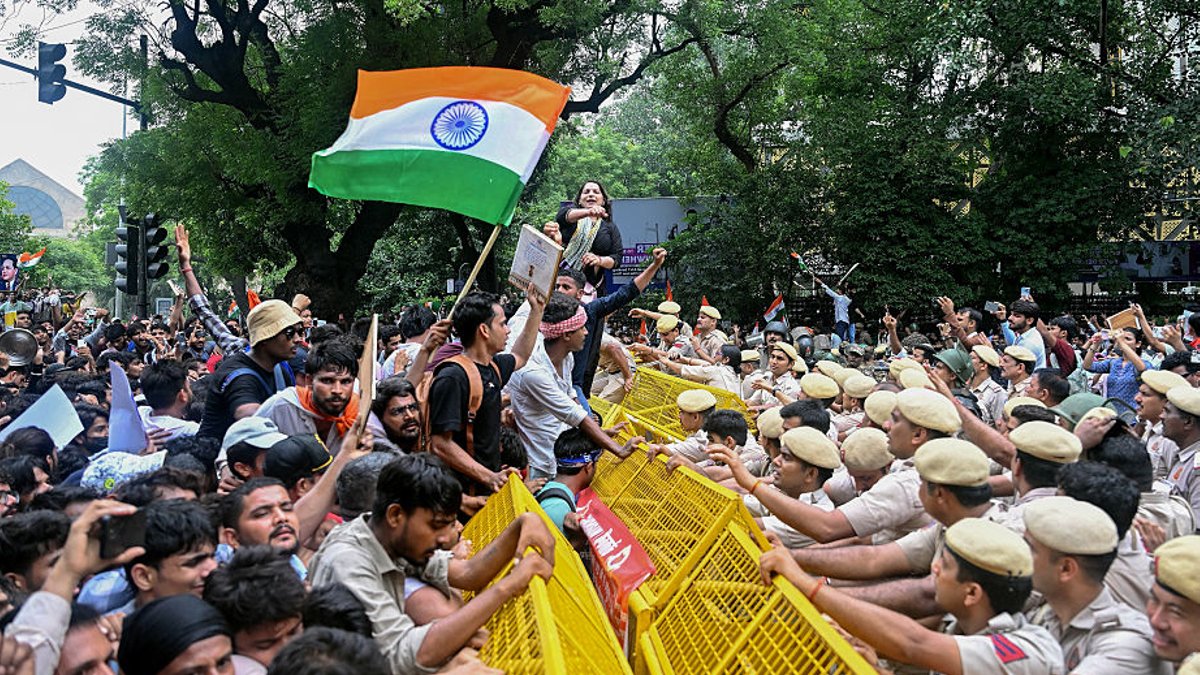
India’s Education Minister Dharmendra Pradhan stepped down Saturday following weeks of student-led protests over alleged irregularities in the country’s national medical entrance examination. His resignation marked the first cabinet exit in Prime Minister Narendra Modi’s 12-year tenure.
The National Eligibility Entrance Test, or NEET, is taken by millions of students annually. Demonstrators accused officials of failing to prevent a paper leak that reportedly led to more than 20 student suicides. They called for systemic reforms and Pradhan’s removal.
Protests turned violent as clashes erupted with police
On July 20, thousands marched toward Parliament in an event called “Sansad Chalo.” Delhi Police used batons and tear gas after protesters broke through barricades. Videos showed officers striking a woman and shoving a baton into another protester’s private area.
Police later released CCTV footage claiming students had thrown stones and vandalized property.
Related: Students told to rethink safe job choices
Protesters remained at Jantar Mantar, New Delhi’s designated protest site, for over 35 days.
The movement began after a public insult
The protests were organized by the Cockroach Janta Party, a youth-led group formed after India’s Chief Justice Surya Kant called unemployed youth “cockroaches” and “parasites.” The comment sparked widespread anger, and the movement gained momentum online before moving to the streets.
Boston University student Abhijeet Dipke founded the group. After Pradhan’s resignation, Dipke posted on social media: “Going to take a nap. See you all in a little while.”
The party’s national spokesperson, Ashutosh Ranka, said the government had agreed to compensate affected families and drop charges against peaceful demonstrators. However, Pradhan’s resignation remained a key demand.
Related: AI warfare poses bigger threat to humanity
India’s examination system has faced scrutiny before. Past leaks in engineering and civil service tests led to cancellations and delays, but protests rarely forced a minister to resign. The scale of the NEET demonstrations suggests young Indians are approaching political accountability differently.
Modi addressed the crisis in a late-night video before the resignation, announcing fast-track courts to punish those responsible for the leak. “Nothing matters more than the future of our youth,” he wrote on X. “Those who harm it will face consequences.”
Despite the victory, Ranka stressed that the movement’s goals go further. “Young people have woken up,” he said. “We’re pushing for major reforms in India’s education and testing systems.”


